Showing posts with label How to. Show all posts

Saturday, 28 January 2023

Lazy Radish Cake 懒人萝卜糕

Every year, I will steam my mom's radish cake which is a hot favourite among friends.  This year, I wasn't very pleased with my outcome because with a handicapped hand, it is hard to be comfortable cooking and I made a few mistakes along the way.

So for a friends' gathering, I went out to look for an easier recipe and found this Lazy Radish Cake as the Chef calls it.

I settled for this as it seems interesting.  For this, you don’t need to slice or grate the turnip.  So, I was really curious to try out the texture.

How to choose: no blemish, wide at the centre and heavy.


Learning:  Though I have no problem cutting and pan-fried, I find that the batter is too little for the radish to adhere well.  So next round, I will increase the flour ratio.  The texture is good and so is the taste.  

Friends commented it is delicious.   So stay tuned for modification.

What you need:
Yield: 2 square trays

1200g turnip (this is after peeled)
300g water
12g salt 
20g sugar 
1 tsp white pepper
300g rice flour 
300g water (I added additional water)

2 pcs Chinese sausages
50g cured meat
60g dried shrimp 
60g oil 
60g shallot, sliced finely 

Method:

Rinsed sausages, cured meat and dried shrimp and steam together for 10 mins.

Cut into match stick thick and long.

Slice sausages and cured meat thinly and then cut them into small bits.

Roughly chopped dried shrimp.

In a pot, mix 300g water, salt, sugar, and pepper and add in the radish.  Cover and bring to a boil and then lower to a simmer for 5 - 10 mins.

In the meantime, in a frying pan, add oil and shallot.  Saute till light golden.  

Add in dried shrimp, sausages and cured meat.  Saute until fragrant.

Transfer the fried ingredients into a big bowl.  

Add 300g water and rice flour.  Mix well.  (I added more water as the mixture looks really dry)

Add 1/3 of the hot radish mixture into the flour mixture.  Mix.

Then add the remaining radish and stir until it slowly thickens a little.

Pour into a square pan.   Cover with cling wrap.

Steam on high heat for 30 mins.

Wait till it cools completely before cutting.  

Cut into thick slices.  

On low heat, pan-fried on all sides until golden.

Serve with sweet chilli.


Enjoy!

Thursday, 17 September 2020

Potato Spam Bun (Yudane method)

When I saw this Potato Spam Bun, I knew right away my family will enjoy them.  It has all their favourite!  I also think this will make a good "sandwich" to take to a picnic.


Now I wonder why Spam is so expensive in Singapore.  In fact, everything is expensive in Singapore!  

As for today's recipe, instead of straight dough method, I wanted to try Yudane method.  In the past, I always mistaken yudane with tangzhong.  Source

After reading, I got a better understanding and for the first time, I am trying to convert a recipe myself.


Learning experience:

I should have tasted the egg mayo first as I think it needs a little salt to taste.  Initially I just seal both ends and it looks like a ruby ball. 

For the next 5, I fold up the two short ends and then seal the two long ends.  So I can get a rectangle which I find it is nicer.

Overall, the bun is delicious!   The bun is soft and the filling is yummy.

Notes:

Flour : Boiling water (1:1)

20% of the flour weight. 


Source and thanks to LC for translating 

What you need:
Yield 10 pcs

Bun
Yudane
60g bread flour
50g boiling water

240g bread flour
50g cake flour
1 egg (55g to the shell)
140g milk
5g salt
50g sugar
5 g instant yeast
40g butter

Filling
3 boiled eggs
500g steamed potatoes 
50g mayonnaise
1 can Spam
A dash of pepper
Salt to taste

Garnish
5 slices of cheddar cheese, cut into 2
Parmesan cheese powder, parsley powder appropriate amount

Method:

Bun

Pour the boiling into the bread flour and mix until well combined.  Cling wrap and let it cool completely.

Combine all ingredients with yudane dough and knead until windowpane stage. 

Shape into a ball and let it proof until double.

To prepare fillings, mash potatoes and add in mayonnaise and pepper.  Mix evenly.

Remove yolks from the boiled egg and mashed fine. 

Roughly mashed the eggs white and combine the eggs into the potato mixture together.                                                                                                                                                                              
Cut the spam into 10 pieces.

Pan-fried spam to remove excess oil.  Drain.

Divide the mashed potato into 10 portions.  Shape them into the same size as the spam.

Degas and shape into a ball again.  Bench rest for 15 mins.

While resting, cut the cheese in halves.

Roll out the dough flat.  

Place the portioned potato mash on top of the dough.

Place the spam on top of the mash.

Fold in the two short sides and then the two long sides. Seal well.

Spray a little water onto the dough and dredge them over the parmesan powder.

Cover and let it proof until 30 – 40% 

Preheat the oven to 190 

Using a scissor, cut the top and place half a slice of sliced ​​cheese on top and sprinkle with parsley powder.

Bake for 15 mins or until golden.


Strongly recommend you try it.

Enjoy!

Thursday, 20 August 2020

Homemade Pandan Extract

A few weeks ago, I pruned my big Suji plants and gave away 50 sticks of the cuttings.  I really hope fellow gardeners will be able to root and pass it forward.

Many years ago, I was trying to find this plant, been to countless nurseries and none sell it.  A lady overheard me asking the staff from one of the nurseries and she proudly declared that she has such a plant in her garden.  Being so desperate, I actually approached her to ask for cutting but she behaves as if I am after her money.

I was sharing this nasty experience with a friend and guess what, she promptly found me a cutting from an Indonesian friend.  I was so happy and the rest is history.  From then on, for years, I have been sharing to friends who enjoy baking pandan cakes or jelly.

As I do not like to feed my family with too much artificial colouring, the Sugi plants actually can give me a nice green hue on top of the pandan.  Pandan itself does not have a strong green.  Very often, commercial bakeries do add some colouring to heighten up the colour.  With Sugi working together with Pandan, I can omit this artificial colouring.

Why I am so desperate back then, I was looking for natural colouring that I can feed my family with. My son has eczema when young, so I tried to abstain artificial colouring for him.  At 20s, I am proud to say he has baby soft skin with no outbreak.

So today, I will show you how I do my Homemade Pandan Extract.

I will be using this to bake Ondeh Ondeh cake and from there you will see how deep this colour is and it is all-natural!

Top layer already filtered - pandan water


Bottom layer: concentrated pandan extract. 100% natural

What you need:

150g pandan leaves, washed and cut
40g suji leaves, washed and cut
200g water

Method:

In a blender, blend the leaves with water.  You might need to do it batches.

Filter out the juice and add it back into the blender with a batch of leaves.  Continue this step until all the leaves are blended.

Using a ricer, extract the juice.

Pour into a container and let it rest in the fridge for 2 or 3 days.

You will see a layer of concentrated pandan juice at the bottom.

Slowly pour away the water and you will be left with the pandan extract.

Use within a week or once green turned into a light brown.


Enjoy!

Monday, 20 July 2020

蒜香排骨 Garlic ribs

Today, let's attempt 蒜香排骨 Garlic ribs.  In my family, we consumed a large amount of garlic daily.  So this dish will appeal I am sure.  


Learning experience:

This is my first time using baking soda to clean the ribs.  Apparently, this will help to remove any strange smell and blood settlement from the pork.

I made a big booboo when cooking this dish.  The second I lower the ribs into the oil, I knew right away something was wrong!  I totally forgot to coat them in flours before lowering it to the oil so I had to remove it and add in the flours, but I think it was too late because some areas, the flours did not adhere.

Overall, the dish is very tasty, thanks to a couple of hours to marinate it.

I also sieve out those garlic bits and my girl commented it was good.

This is the first time I used glutinous rice flour as a coating.  Since I made a blunder, I couldn't really tell the texture.  So if you are trying it, can you feedback please?

What you need:

600g baby back ribs
½ tsp baking soda

1 stalk spring onion
15g ginger, skinned and cut to pieces
50g garlic, skinned
30g water

1 tsp salt
1 tsp pepper
1 tsp sugar
1 piece fermented beancurd
3g oyster sauce
8g cooking wine
6g soya sauce
1 egg

30g potato starch
35g glutinous rice flour

Method:

Chop up the ribs to your preferred size, add in baking soda and give it a rub.  Add in water and wash for 2 mins to clear off the blood from the bones.  Discard water and rinse off well.  Drain.

In a blender, add in spring onion, ginger and garlic and blend to a paste.

Combine seasonings into a bowl.  Adjust the saltiness to your liking.

Add seasonings to the ribs together with the garlic paste.  Mix well and chill for 2 hours.

Add in flours and mix well.

Heat up a wok with oil to 150°C.  

Lower heat to med small and fry ribs for 3 mins.

Remove and drain.

Heat oil again to 180°C and fry ribs for 10 secs.


Enjoy!

Monday, 13 July 2020

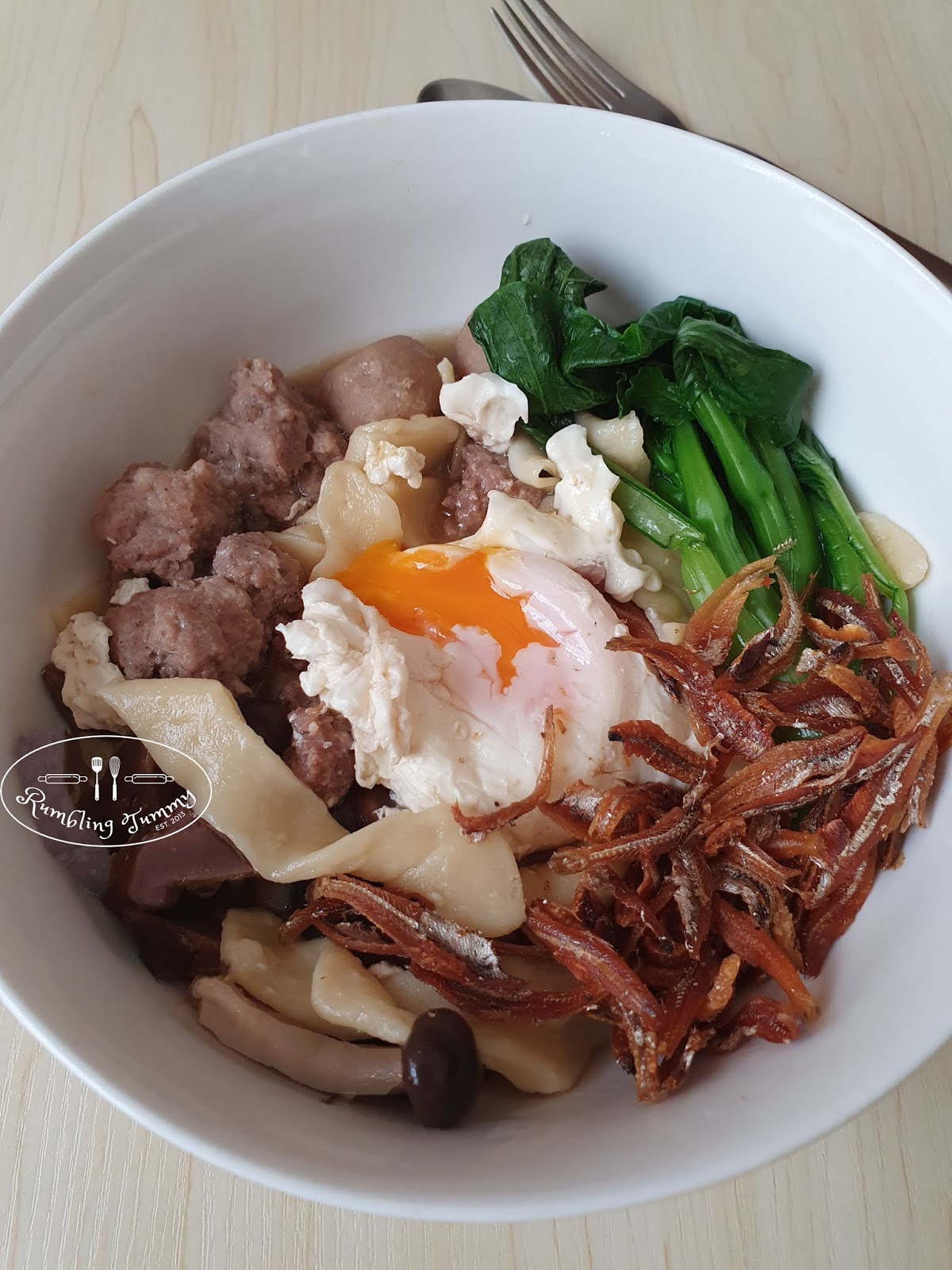
Mee Hoon Kueh 板麵

I had a craving Mee Hoon Kueh aka 麵粉粿 or 板麵.  Most of the time, I like soupy noodles except minced pork noodles.  My preference will always be with soup.

Making the dough for this Mee Hoon Kueh can be fun too.  It can be a bonding activity with the kids.  Watching them roll the dough and pinching the dough.  Ever since the Circuit Breaker started, my better half has taken an active role in the kitchen.  It is good to see him learning to cook.   So for this meal, he took pitched in to prepare the dough.

This can be a fast meal to whip up because the soup base can be done in advance.


Learning experience: 

The texture of the noodle is very good.  Chewy and springy and the addition of eggs bring a nice flavour to a flat-tasting dough.

I need to be careful about this Japanese Soy sauce that I am using, the colour is very dark.

What you need:

Mustard, cut to 2"
Meatball, one packet
6 mushroom, soak to soften, sliced
Handful of dried Ikan bills

Minced pork

300g minced pork
Corn starch
Soy sauce
Pepper

Marinate
Combined minced pork, soya sauce, pepper and corn starch.  Marinate it for 1 hour.

Pork/ikan bilis broth

200g ikan bilis, rinsed
2 pcs pork bone
4 clove garlic
500ml water

Method:

In a pot, add a little oil and fry ikan bilis and garlic until fragrant. 

Add in pork bone, and water and bring to a boil.  Let it simmer for 1 hour.

Drain, and season with salt and pepper.

Dough

300g plain flour
1 tbsp oil
2 eggs
50g water
½ tsp salt

Method:

Using a chopstick, mix all the ingredients until a soft dough is formed.  Depending on flour absorption, you might need a little bit more water.  Cover and let it sit for an hour.

Knead the dough until smooth.  No need to be window pane.

Divide into 3 portions.  Cover the other 2 to prevent drying.

Roll the dough into a rectangle and cut into strips.  Cover.

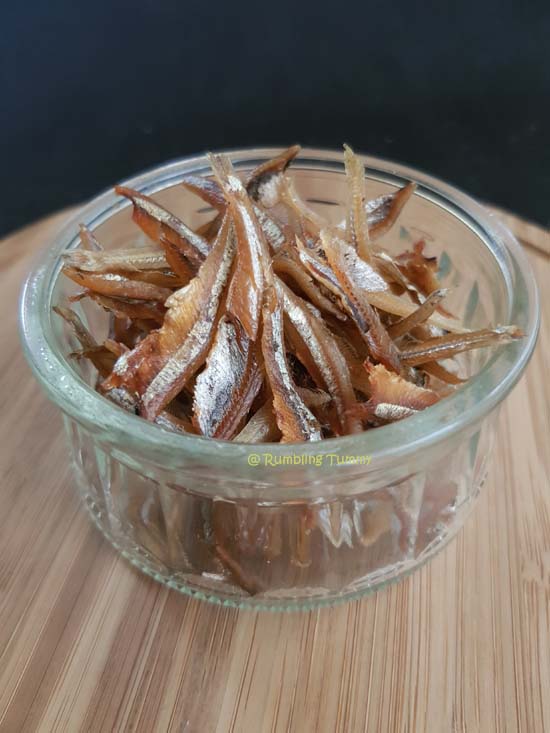
Fried Ikan Bilis

Heat up a small pot of oil, deep fried ikan bilis until golden and crispy.  Drain.  Set aside. 

Note: To achieve crispy ikan bilis, I was taught not to wash the ikan bilis.  You need to fry it straight from the packet.  So I normally use more oil so that I can "wash" them in the oil.  Do not keep the oil.

Assembly

Bring a pot of water to boil, blanched the mustard until it turns dark green.  Remove and place it inside cool water to stop the cooking process.  Drain and set aside.  Do not throw the water.

Add the sliced mushroom to the broth and bring it to a boil.

Add in the meatball to the broth and cook until meatballs float up.  Remove.

Add in the minced pork and cook it for 3 mins.  Remove.

Using the same pot of boiling water for blanching the vegetable, pinch dough and cook until the dough floats up.  Transfer into serving bowl.  

Add in the mustard, meat balls and minced pork.

Crack an egg and top off with a very hot broth.

Garnish with fried ikan bills. 

Serve immediately.
 

 Enjoy!

Friday, 19 June 2020

Ang Ku Kueh 紅龜粿 (pandan) Natural colouring

My girl loves Ang Ku Kueh 紅龜粿, I guess it is the mochi-like texture that she enjoys.

Since I had prepared a tub of mung bean paste prepared, today I shall make this for tea time.  Plus I needed to harvest my pandan as it has overgrown way too much.

It also gives me an excuse not to add food colouring to my food.  Err... shall I call it 綠龜粿?  So lame right?


Learning experience:

I added more water than indicated as my dough cannot form.  I also pre-cook some dough to make it chewier. 

Overall, I feel that it is not as soft as those that my hubby bought but my family and neighbour gave a thumbs up for it.

Next, I will try the one from my aunt.  


What you need:

Banana leaves
Some oil for the mould and banana leaves
A med size 紅龜粿 mould
Mung bean fillings
Peanut fillings
Shallot oil

Method:

Using the same pot of water for the dough, add a little oil and blanch the banana leaves.  Once it turns dark green, remove and transfer into a tub of tap water.  (this is to stop it from turning black).  Dry and set aside.

Skin

150g glutinous rice flour
30g rice flour
140g pandan juice
50ml water (to adjust)
3 tbsp vegetable oil or cooking oil

Method:

In a bowl, combine glutinous rice flour, rice flour and pandan juice and mix together.  Add in water slowly and knead until a dough is formed.  Pinch 20g of dough out and cooked in a pot of water until it floats.

Combined back into the main dough and continue to knead until smooth.  If it is too dry, continue to add water until a smooth soft dough is achieved.  Cover and set aside. (blanch the leaves now) 

Weigh out 18g for the dough and 13g for the filling.  Wrap together.

With seam sides up, press the dough into the mould with your palm.

Place onto the banana leaves.  Set into the steamer.

Steam on high heat for only 4 mins and remove it immediately and brush with some shallot oil.

Cool it down and served.


Enjoy!

Monday, 1 June 2020

Air Fried Peanuts

Circuit Breaker Day 55.  Tomorrow, the 1st batch of the workforce will be allowed to go back to work.  Let's hope there won't be a big outbreak so that we can move on to the next phase.

Keep safe everyone.

*****************

Now back to our blog post.  

I used to slave over the stove to cook peanuts and I remembered days when I helped mom to remove the skin from the peanuts.  It was a tiring task.  

Instead of using the wok, I also tried oven baking it but some times, I ended up with a burnt batch.


These days, I am no longer intimidated by it because I air-fried it and it is foolproof.

Back to today's post, hubby accidentally bought 2 big bags of peanuts home.  Now I have to come up with something that I can use it up.

First, let's Air Fried Peanuts to prepare for our next post.


What you need:

400g raw peanuts

Method:

Remove any impurities.  Give the peanuts a quick rinse.

Add into the basket.

Set 140°C and bake for 12 mins.  Give it a shake midway through.

Increase temperature to 160°C and continue to bake for 6 mins.

Remove and let it cool slightly.

Using two hands, rub the peanuts.  The skin should come out nicely. 

Separate skin and nuts.

Once cool completely, store in airtight containers.

Enjoy!

Monday, 29 July 2019

Taro Milk 芋頭鮮奶

After seeing FT posted her attempt on Taro milk 芋頭鮮奶, I wanted to try it too because I love Taro!

Saw small taro available in the supermarket and I decided that today I shall try it.

Handling Taro must be careful with some people tends to be very sensitive to Saponins juice which is present in yam.  So if you have sensitive skin, do wear a glove when handling.  If you developed rash while handling, try to rub lemon juice or vinegar on your hands.

I normally buy Thai yam as I find the taste better and it is softer and "powdery".  It is rounder and has less "lines"  It is very suitable for making a paste or fillings.

For Malaysia Taro, it is more longish and more lines which is suitable for stew as it is harder.

When choosing yam, look for those that are hard and heavy.

To store yam, do not refrigerate, just wrap it in newspaper and place it on the floor.


Learning experience: 

Next time, to add some colours to this drink, I shall rehydrate some taro powder.

What you need:

150g fresh milk
25g castor sugar
200g cooked yam

Method:

On a non-stick shallow pan, combine milk, sugar and cooked yam.  Roughly mashed the yam with a fork.  (do not overdo so that you will still have some bits to it).

On low heat, mix and stir until it thickens and when draw a line, the yam mixture will take a few secs to come together. 

Once cooked, transfer into a bowl, cling wrap and let it cool.

In a glass, add the yam mixture, spread around the glass.

Pour in cold milk and serve.

Note: you can serve with yam boba too but since I don’t have and am too lazy to make a batch, I am doing without.


Enjoy!

Monday, 29 April 2019

Nasi Lemak Cake

For my dad's birthday, we ordered a Nasi Lemak Cake for him.  I was appalled by how costly this is (it comes only with peanuts and ikan bilis).

I decided to challenged myself to replicate this.  Thanks to my friends for many pointers and sharing.  (you know who you are).


I have also added my family's hot favourite and that is the my MIL's sambal prawns and also a side treat of luncheon meat.

My children and hubby gave me a thumbs up for it.  I am so happy that it turned out well and we enjoyed it.


Learning experience: 

Next time, I will measure out the rice for each layer.  I hold back a lot by only brushing a thin layer of Nasi Lemak Sambal on the omelette and not the luncheon meat layer.

I learnt by blending pandan leaves with the coconut milk, it gives a nice aroma to the rice.

The ratio of rice to water was just nice too as my grains turned out not mushy.

I have used 3 eggs to make the omelette.  Next time, I will use 4 eggs instead.


Enjoy!

Monday, 22 April 2019

Air fried Ikan Bilis

In the past, I always have trouble getting crispy ikan bilis.   Mine was either burnt or it wasn't crispy.  Later on, I learnt that I need to drain the ikan bilis well before frying them in low heat first and then increase the heat to high to crisp it.

Years later, someone told me that outside vendors do not wash their ikan bilis and that is why it is crispy.

I have tried that method too and it was indeed very crispy but the thought of these babies sunbathing in the open with flies buzzing around, did not appeal to me the least bits.

Using air fryer to fry Ikan Bilis really save me a lot of oil.

On the other hand, I was able to achieve both the crispness as well as the hygiene factors using the air fryer.

These Air Fried Ikan Bilis is going to be an accompaniment and the rest will be  TV snack for hubby.


What you need:

200g ikan bilis
1 tbsp oil

Method:

Rinse the ikan bilis and drain.

Preheat air fryer to 160°C.  Air fry them for 10 mins in the basket.

Remove and place them into a 7" baking pan.

Add oil, mix evenly and air fried them at 140°C for 10 mins or until crispy. (depending on the size of your ikan bilis)

Remove and cool completely before storing in airtight container.


Enjoy!

Thursday, 18 April 2019

Air fried peanuts

I used to use the wok to fry raw peanuts.  

3 pointers mom taught were:
  • Maintain medium low heat.
  • Stirring often to ensure all peanuts are evenly cooked.
  • Listen from "heavy" to "light" tone (Light means the peanut is cooked).
To remove skin:
  • Pour onto a clean tea towel and rub.
  • Use the colander to "sift" out the skin.
For me, I find this tedious and luckily I am no fan of peanuts unless the recipe calls for it.

So today, I am trying the air fried method.  

This air fried peanuts turned out crunchy and nicely brown in less than 15 mins without monitoring.  


This peanut is for a "project" that I am going to experience.

For the balance, hubby can have it as snack whom I am sure he will be delighted as he is a nut lover.

Learning: Though I am no fan of peanuts I am glad that I made the decision to buy this variety (small and round).  It turned out really sweet and it has that light texture to it.  Crunchy and sweet..... mmmm... this might turn me into a peanut lover soon.

What you need:

200g raw peanuts
1 tbsp peanut oil
½ tsp salt

Method:

Preheat air fryer to 140°C.  

Add the raw peanuts into a 7" baking pan.

Air fried it for 10 mins.

Add in peanut oil and salt and mix to evenly coat.  Return pan to the air fryer.

Air fried it for another 5 mins at 160°C. 

Cool completely before storing in airtight container.


Enjoy!

Tuesday, 12 March 2019

Crunchy Goreng Chempedek

If you follow my Instagram, some time back, I bought some Goreng Chempedak.  As you know how rare to have this in Singapore, I jumped into it quickly when I saw it selling.  To my disappointment, it was really costly and not that great.

So during a trip up north, we managed to buy some decent price chempedak.  Stored some in the freezer and the rest I turned them into this Crunchy Goreng Chempedak.

Since my crave on that last occasion did not fulfil, now I am a happy woman eating to my heart's content.


Learning experience: 

I added in custard powder as I did not get that golden hue even I double fry it the first time.

I removed the seeds as I find it easy to just pop and eat.  This stays crunchy even after cool.

Also the double frying method enhance the crunchy texture further.  So REMEMBER to double fry them.

Definitely a keeper!

Thank you ACT for sharing this nice recipe.

Adapted


What you need:

100g butter
½ tsp salt
1 -2 tbsp sugar
150g plain flour
80g rice flour
80g glutinous flour
4 tsp custard powder

Method:

Combine everything into a mixing bowl.  Using a pastry cutter, cut the butter into the dry mixture until well combined. (Store the excess in the airtight container, chilled).

Weigh out the amount needed, add an equal amount of water and mix to form a paste. (I find this ratio work best for this attempt).

Heat oil and deep-fried until brown lightly.  Remove and drain.

Increase heat and refry until golden.

Drain and serve warm.


Cheers!

Thursday, 23 August 2018

Sesame Walnut Paste Sweet Soup 芝麻合桃糊

Some time back, I ate Sesame Walnut Paste Sweet Soup 芝麻合桃糊 using store-bought sesame and it tasted horrible.  It lacks that fragrant taste to this sweet soup.

Then I was told that if I were to use sesame seeds for dessert, I have to buy the ones from Japan.  Since that failed attempt, I have been thinking about it and grabbed a pack during my last visit to a Japanese supermarket.

When roasting black sesame seeds, you need to be very careful because too high heat will result in a bitter taste.  Since it is black, you can't really see the doneness.  One method is to add some white sesame seeds so that when the white sesame seeds turn golden, this will indicate that the black sesame seeds are toasted well enough.

I saw this recipe adding walnut and I thought it is interesting since walnut is good for the brain and both oils from these are beneficial to one's health.


Note: You can simply use any blender you have to do this, just blitz longer.  The higher the power of your blender, the smoother the result.

Learning experience: 

The next round, I will remove the skin from the walnut and see whether it will taste better as I detected some bitterness and I suspected it might be due to the walnut skin.

Overall, the texture is smooth and I love it.  If you want it to be even smoother, go thru it in a muslin bag.

What you need:

50g roasted walnuts
100g roasted black sesame seeds
50g pearl rice, soaked for ½ hour (I don't have jasmine rice)
30g sugar
500g water

Method:

Place walnuts into the TM bowl and blend 10s/sp 7.

Add in black sesame seed, pearl rice, sugar, and water.  Cook for 10 mins/100°C/Sp 1

Blitz for 3 mins/sp 10.

Serve hot

Enjoy!

Thursday, 16 August 2018

Aiyu Jelly (愛玉)

When I was younger, I used to enjoy a bowl of jelly with lime.  It was until I read that many of those that sell are not really jelly.  It has already been mixed with some artificial elements to it.  So I stopped eating.

Then I found out that this jelly was made from Aiyu seeds (from dried fig fruit) prominently available in Taiwan (I guess it will also be available in China).

I also chanced upon a video on how they harvest this Aiyu.  Pretty amazing.

Anyway, washing Aiyu looks tedious but recently I found out that using the Thermomix saved me a lot of trouble.

Today, I shall attempt Aiyu Jelly (愛玉) via the machine.

Thanks SSL for sharing your method.


Learning experience: 

I have attempted based on 40g seeds to 1200ml water but it could not solidify.  Not sure whether it is because I used alkaline water.   So dumped the whole batch and rework on the quantity as well as just using filtered water.  This time, it did set.

If you don't have the machine, just add the seeds into a muslin bag and rub until the water feels a little slime.  (The rubbing method should be like you are washing clothes by hand).

What you need:

50g aiyu seeds
1000ml water, boiled and cooled (or you can use mineral water)

Honey
Lime

Method:

Sift the seeds.

Combine aiyu seeds with water in the TM bowl.

Wash for 9 mins/Sp 4.

Sieve immediately into the mould.

Leave to set at room temperature for 1/2 hour before chilling.

Serve with lime and honey.


Enjoy!


Monday, 30 April 2018

Sweeten Red Bean 蜂蜜红豆 (rice cooker)

Red bean is extremely good for health.   It is associated with slower aging, improved heart health, cancer prevention, lower cholesterol, reduced waistlines and increased energy.  (Source)

In TCM, it is very good for women to consume red bean drink or red bean as it can increase blood cell count and control the “dampness” in the body.

Cooking red bean can be really tricky and I have my fair shares of failures.

So here is some pointers for me to note down.

When selecting red bean, it should be a lighter red.  The darker shade meant that it has been on the shelf for long and it is harder to cook or it can never get softened even if you pre soaked.  I learnt that the hard way!

Do the first boil to remove impurities as well as that metallic/bitter taste. 

Always add sugar AFTER the beans are fully cooked and turned soft.  You can never have soft beans if you add before that.  Yes, I learnt that!

Uncooked beans have this bitter taste.

I have tried cooking red bean via direct heat, thermomix and rice cooker.  I have yet to attempt this on the pressure cooker.

So today I shall attempt Sweeten Red Beans on the rice cooker.

Using this rice cooker method, you need not pre-soak or wash the beans so that the beans will stay whole and it is easy to remove impurities as during the boiling stage, the bad beans will float to the top and it is easy to remove that.


What you need:

500g red bean (choose one which is lighter red)
1179ml water (old beans 1278ml)
375g sugar
1 tsp salt

water for rice cooker (400ml + 200ml)  

Method:

Add red bean into a pot and add water just 2 cm above water.  Turn on heat.  Give it a stir.  Bring to boil.

Remove all impurities that float up.  Boil for about 2 mins.

Drain and wash.  Throw away the water.

In a pot, add in the beans and water.

In the rice cooker, add in 400ml water.  Cook for 1 hour.

After cooking, do not remove, let it sit for 10 mins.  Fluff it up.

Repeat process with 200ml water in the rice cooker.

Once beans have soften, remove from rice cooker and add in sugar and salt.

Stir until sugar is well mixed with chopstick.

Set aside to cool completely before using or storing.


 Enjoy!

Wednesday, 24 June 2015

Attap Chee with Grass Jelly

Whenever I have ice kachang, one of my favourite ingredient will be Attap Chee 亞答子.  I love mine hard but I do know friends that prefer softer version.  Attap Chee came from Nypa palm and it is basically tasteless if not treated.

During my recent trip, I spotted huge attap chee 亞答子 and bought home some.  These are not like those available here.  Thus I need to prepare it and cook it before eating.

This Attap Chee with Grass Jelly is usually my quick fix to counter the heatiness especially it is so humid of late.


How to treat fresh attap chee

Fresh Attap Chee
Rice water
a few lime leaves (shred)
sugar (adjust to your liking)
water enough to cover attap chee

Method:

Wash attap chee with rice water.

Rinse and repeat one more time.  

Drain.

Add in lime leaves, sugar and water to attap chee and bring to boil.

Simmer for 10 mins.

Remove from heat and let it cool.

Store inside fridge.


Cheers!

Wednesday, 8 October 2014

Salted egg 腌咸鸭蛋

I bought a tray of duck egg thinking that I will cook something out of it but unfortunately I couldn't recall which recipe was it so in the end, I ended up with this tray of duck egg that I didn't know what to do with it.

So I decided to try my hand at making Salted Egg.  Hubby thinks I am crazy but well for experiment sake, I am game for it.


Findings: I had a hard time putting weight on the eggs as my container's openning is small and thus I can't fit a small plate inside.  The only ones that can squeeze through is sauce plate and that was not enough.  It was frustrating then as a slight movement, I had to redo the whole process again.

If I ever try this again, I will layer the eggs, put the weight and then fill in the salt solution in real slow.

Source: Kim Ping Wong

What you need:

400g sea salt
1000ml water
10 duck eggs
2 star annise
1 tbsp shaoxing rice wine 绍兴酒

Method:

Boil water and salt until salt dissolved.  Leave salt water to cool COMPLETELY.

Wash duck egg and wipe dry.  Set aside.

Wash and dry container thoroughly.

Lay duck eggs at the bottom of the container neatly.  

Pour salt solution into the container.  Salt solution MUST be FULLY submerged.  Place some weight over the eggs if necessary.

Store in a cool, dark place.

After 18 days, salted eggs are ready.

Store the remaining eggs in the fridge.


Cheers!